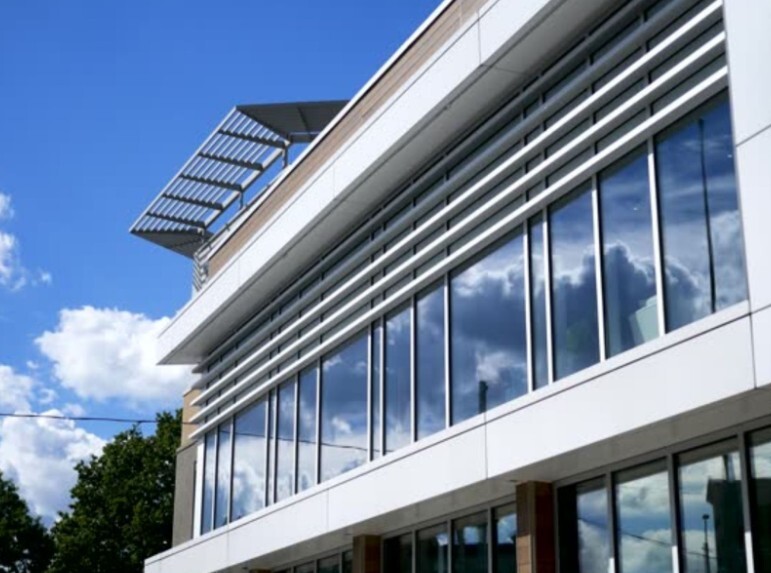
Airfoil Sunshades: Enhancing Exterior Comfort
Every building interacts with the sun. Orientation, glazing, and exterior finishes all shape how heat and light move through a façade. As architects balance energy codes with occupant comfort, airfoil sunshades provide a precise way to temper solar gain at the source while keeping interiors bright and ventilated.
How Airfoil Sunshades Control Sunlight and Airflow
Architectural sunshades regulate solar exposure while maintaining airflow around the façade. Their aerodynamic geometry and durable construction balance shading efficiency, ventilation, and long-term reliability.
Aerodynamic Blade Geometry
An airfoil system uses horizontally or vertically mounted blades shaped like a streamlined wing. The curved aluminum profile redirects sunlight, breaking up direct rays and allowing only filtered light to reach the glazing. By adjusting blade pitch, designers can tune the cut-off angle for the building’s latitude so the system blocks high-summer sun while permitting low winter daylight.
Structural Composition and Materials
Each assembly includes extruded aluminum blades, outriggers, and support brackets anchored to curtain-wall framing. The alloy’s strength-to-weight ratio allows long spans with minimal deflection, and its corrosion resistance supports decades of exposure in harsh conditions. Clear anodized or high-performance powder coatings preserve color and reflectivity while minimizing maintenance compared with painted steel or composites.
Maintaining Airflow and Visibility
Unlike solid canopies or deep fins that restrict ventilation, the aerodynamic blade profile lets air move freely around the façade. This maintains pressure balance at the glass while preserving outward visibility, a key feature for naturally ventilated or mixed-mode buildings.
Reducing Solar Heat Gain and Glare
Effective façade shading manages both heat and light. Properly oriented blades shade glass during peak angles, preventing infrared radiation from penetrating the façade. Studies modeled under ASHRAE 90.1 show that exterior shading can reduce cooling energy by 10–25 percent depending on window-to-wall ratio and region. Inside, occupants experience lower surface temperatures near the glass, reducing HVAC loads and improving comfort.
When sunlight hits glazing at shallow angles, it creates glare that disrupts visual comfort in offices, classrooms, and healthcare spaces. Airfoil sunshades diffuse that brightness, allowing softer daylight to illuminate interiors without reflections on screens or work surfaces. Because light is filtered rather than blocked, spaces remain bright and connected to outdoor views.
Architectural Integration and Design Flexibility
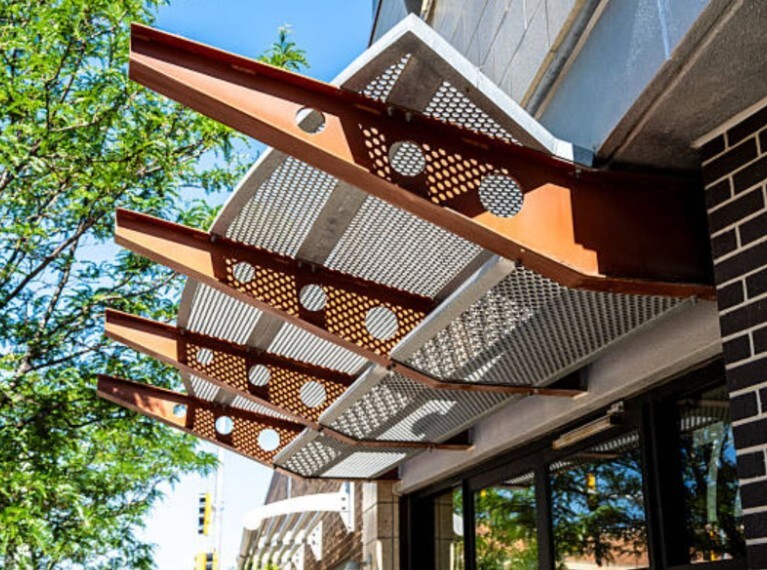
Airfoil sunshades must complement the building’s orientation and visual rhythm. Their mounting method and blade configuration determine how effectively the façade balances shading, airflow, and appearance.
Mounting Configurations and Orientation
Airfoil sunshades install in several configurations depending on exposure and design intent. Horizontal blades above glazing block high-angle sun on south elevations. Vertical blades along east or west façades intercept low-morning and late-afternoon rays, while cantilevered assemblies shade tall window bands without increasing curtain-wall depth.
Adjustable Geometry and Spacing
Each blade functions as an independent extrusion, allowing engineers to adjust spacing and tilt to meet project goals. Wider spacing increases daylight; tighter spacing maximizes shading. Some systems include adjustable brackets that modify pitch after installation, useful for retrofits or multi-season tuning.
Material Performance and Finish Options
Aluminum remains the preferred material for long-span shading because it combines rigidity, corrosion resistance, and low upkeep. Factory finishes such as Class I anodize or high-performance polyester powder coatings extend service life beyond twenty years, even in coastal or industrial conditions. Lighter finishes reflect more solar radiation, while darker tones blend visually with tinted glazing. Integrated end-caps and concealed fasteners maintain a clean architectural line.
Integration with Building Envelopes
Airfoil systems connect directly to curtain-wall mullions or structural framing using welded or bolted brackets.
- Coordination between façade engineers and manufacturers during design ensures loads transfer properly without compromising glazing seals.
- When installed above ventilated zones, open geometry helps relieve localized heat buildup, preventing re-entrainment of exhaust air.
- As part of a broader envelope strategy, these systems often work with louvers and architectural screens to coordinate ventilation and solar shading across wall assemblies.
- The combined approach supports energy-efficient design under current IECC and ASHRAE 90.1 standards.
Incorporating engineered sunshades early in design keeps performance and aesthetics aligned from the start.
Energy Efficiency and Occupant Comfort
Modeling by energy consultants shows that even modest overhangs can lower glass-surface temperatures by several degrees Fahrenheit during summer peaks. Over a full operating year, airfoil sunshades contribute to measurable reductions in energy-use intensity (EUI) and support LEED daylighting and thermal-comfort credits.
Consistent daylight and reduced glare also enhance visual comfort, improving concentration in classrooms and offices while minimizing fatigue in healthcare settings.
Applications Across Building Types
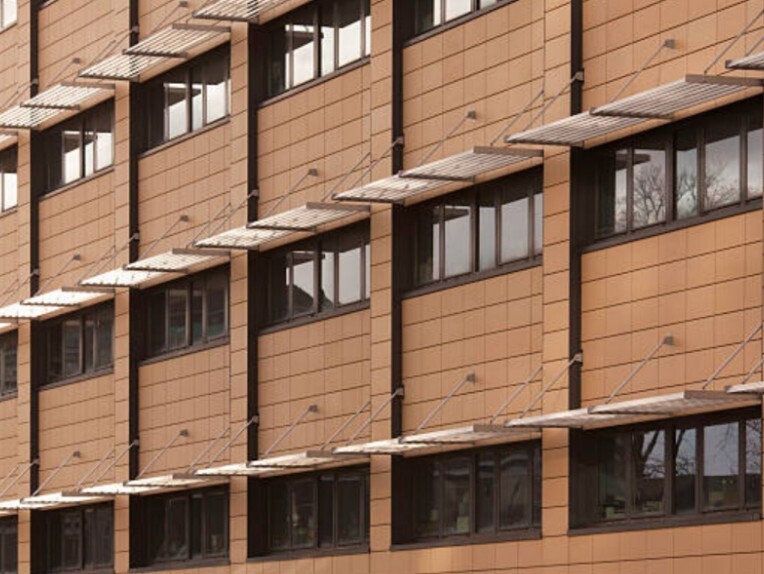
The performance value of architectural sunshades extends across a range of commercial buildings.
- Office and Corporate Campuses: Horizontal blades limit glare and manage daylight on south façades.
- Education Facilities: Shading stabilizes classroom temperatures and supports natural light.
- Healthcare Environments: Vertical blades soften light and maintain privacy without blocking views.
- Civic and Retail Projects: Shading doubles as a visual accent that unifies façades with surrounding streetscapes.
These examples show how adaptable geometry and durable materials make solar-control sunshades practical for both retrofit and new-construction projects in any climate zone.
Durability and Lifecycle Value
External shading systems endure continuous exposure to wind, moisture, and ultraviolet radiation. Aluminum’s corrosion resistance and rigidity under load allow long service life with minimal upkeep. Welded or mechanically fastened connections distribute loads through stainless-steel hardware, and thermal breaks between brackets and structure limit conductive heat transfer. With proper installation, static components perform reliably for decades.
Aesthetic and Environmental Harmony
The smooth curvature of airfoil blades casts subtle shadows that animate façades throughout the day. Because assemblies project only a few inches to a couple of feet from the glazing, they deliver strong shading performance within compact profiles. Aluminum’s recyclability supports circular-material goals, and by reducing cooling demand, external shading also lowers indirect carbon emissions.
Specification and Collaboration
Successful integration depends on early coordination between the design team and manufacturer. Air Performance engineers evaluate loads, connections, and finishes during schematic design to ensure each system meets both structural and aesthetic criteria. Standard and custom bracket depths align blades with glazing or project them outward for deeper shading, maintaining consistent visual rhythm across the building envelope.
Partner with Air Performance for Engineered Sunshade Systems
Air Performance designs and manufactures architectural sunshade assemblies that combine airflow efficiency, durability, and refined appearance. Each system is engineered for site-specific conditions and supported by detailed mounting and finish options to streamline installation. Contact us today for more information.