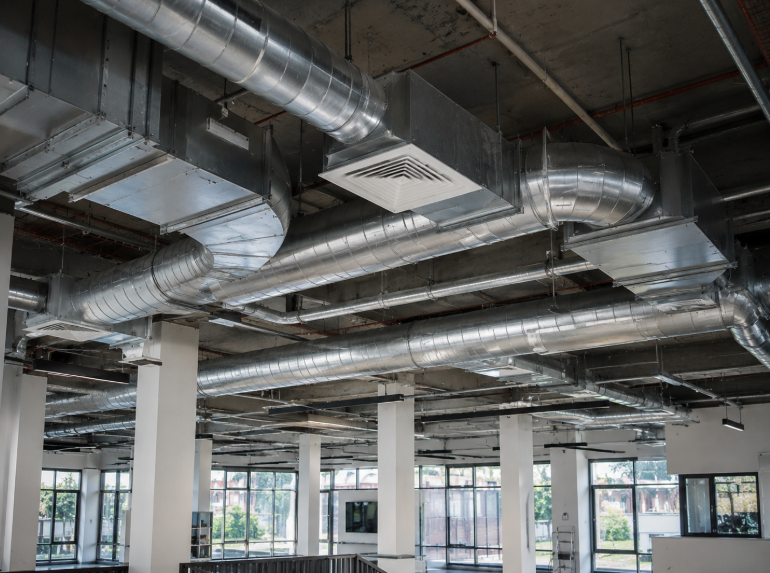
Commercial Building Ventilation: Improving Airflow, Comfort, and Efficiency
Commercial buildings feel the effects of weak ventilation fast. Stale air, humidity trouble, and uneven comfort often trace back to weak airflow, including problems at the opening. Commercial building ventilation deserves early attention because weak airflow can create comfort problems, moisture risk, and equipment strain that spread well beyond one room or one complaint.
Why Commercial Buildings Need A Different Ventilation Approach
Commercial buildings place different demands on airflow than houses do. A residence usually serves fewer people, lighter internal loads, and a more predictable pattern of use. A commercial property may have conference rooms that fill and empty throughout the day, work areas that generate heat, longer operating hours, and changing occupancy that affects how much outside air the building needs over time.
It also often has more building area to serve and more coordination pressure around how outside air enters and moves through the structure. Sources in the brief also point to system response based on real building use, which helps explain why commercial ventilation is more dynamic than a residential setup.
How Commercial Building Ventilation Works In Practice
In a commercial project, airflow has to follow a usable path through the building under real operating conditions.
How Air Moves Through The Building
Air has to enter through intended openings, move through occupied areas, and leave through a route that does not create new problems at the enclosure. In commercial building ventilation, that path has to stay usable under real loads, shifting occupancy, and day-to-day operating conditions. In practice, that means bringing in outside air, pushing stale indoor air out, diluting pollutants, helping manage humidity, and supporting comfort across occupied areas.
Building layout affects whether that airflow can move where it needs to go. Opening placement matters because airflow only becomes useful when the path through the building actually connects intake and exhaust points to occupied space.
Why Commercial Projects Need Earlier Coordination
Commercial projects are more likely to be reviewed around outside-air delivery, system performance, real usage patterns, and compliance than residential work, which is one reason airflow decisions need earlier coordination. No one on the project team needs a mechanical-engineering lesson to see the difference.
In commercial work, commercial building ventilation carries more weight from the start because use, review, code pressure, and system response are harder to separate. Once occupancy, operating hours, and opening performance are all in play, those decisions start affecting layout, coordination, and long-term building operation much earlier.
Where Louvers Fit Into The Airflow Path
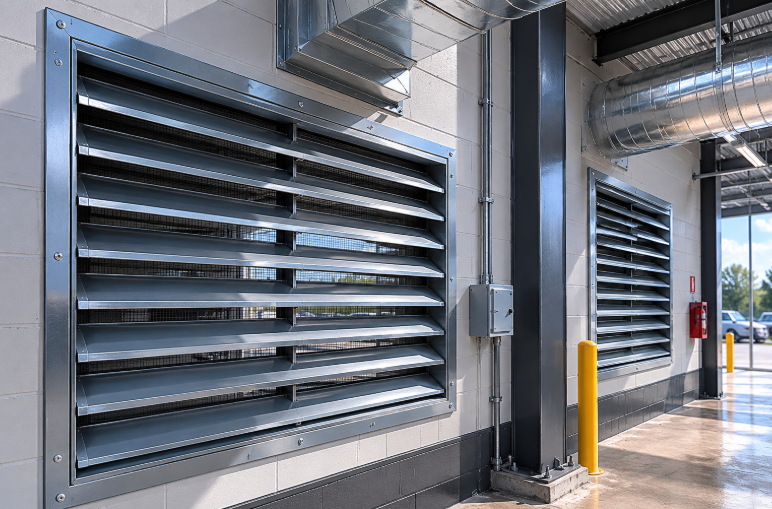
Louvers play a real part in making that opening strategy work. Air Performance explains that commercial louvers allow fresh air to enter and stale air to exit while helping block rain, dust, and debris at the opening. In commercial work, the opening has to do both jobs at the same time.
Because the opening has to do both jobs, louver performance cannot be treated lightly. Air Performance notes that performance is tied to air movement, water penetration resistance, and wind-driven rain resistance under AMCA-related testing. For architects, that makes the opening part of envelope coordination. For contractors, it means the opening has to match the intended airflow path. For owners, it means a weak opening strategy can turn into recurring comfort, moisture, and maintenance problems after occupancy.
Why Louver Size And Free Area Matter
Sizing makes the difference easier to see. A louver is not defined only by the height and width shown on the drawing. Air Performance’s sizing guide explains that blade profiles, spacing, drainage features, and open area all affect how much air can actually move through the unit. Two louvers can share the same nominal dimensions and still perform differently once airflow demand is applied. In commercial building ventilation, that means an opening can look adequate on paper and still underperform in use.
Free area is where the selection decision gets more precise. What matters is how much usable opening the louver provides and whether that opening can support the airflow the project actually needs at an acceptable velocity. Air Performance ties louver selection to required airflow, typically in CFM, and to free area and velocity rather than nominal size alone. That keeps the conversation tied to performance.
What Happens When Ventilation Falls Short
When airflow is undersized or poorly coordinated, the problems usually show up first in the space and then in the systems trying to support it.
Occupied Conditions Usually Show It First
When ventilation is undersized or poorly designed, the first warning signs usually show up in the occupied space. Rooms may feel stale, uneven, humid, or harder to keep comfortable than expected. Poor ventilation can also contribute to VOC buildup, respiratory irritation, condensation, mold growth, and, in some combustion-related situations, dangerous backdrafting conditions. Different symptoms can point back to the same building-level problem: the airflow path is not doing what the space requires.
Equipment Often Takes The Next Hit
Weak ventilation can also put pressure on the equipment behind it. If the building is not getting the airflow it needs through the intended openings, connected systems can see higher energy use and weaker efficiency. Incorrectly sized louvers can compromise airflow and contribute to those losses. In commercial building ventilation, those problems can show up as avoidable operating drag across the space instead of staying isolated to one piece of equipment.
Plan Airflow Early With Air Performance
Early coordination gives commercial teams a better shot at getting airflow and opening protection aligned before small issues turn into bigger ones. Air Performance offers louvers and related products for commercial applications where outside air and weather protection both matter at the opening. Contact us today to discuss products suited to your project conditions and airflow needs.
Frequently Asked Questions About Commercial Airflow
What Is The Purpose Of Ventilation In A Commercial Building?
A commercial building needs ventilation to bring in outside air, move stale indoor air out, dilute pollutants, help manage humidity, and support usable indoor conditions across occupied spaces.
Why Is Commercial Ventilation Different From Residential Ventilation?
Commercial buildings usually have higher occupancy, larger served areas, longer operating hours, and more internal heat and coordination pressure than houses do. That makes the airflow strategy more demanding from the start.
What Role Do Louvers Play In A Commercial Ventilation Strategy?
Louvers help the building bring in outside air and exhaust stale air while also limiting rain, dust, and debris at the opening. They matter because the opening has to support airflow and weather protection at the same time.
Why Does Louver Size Matter On A Commercial Project?
Louver performance depends on more than visible frame size. The usable opening, airflow demand, and velocity all affect whether the louver can support the air movement the project needs.
What Happens When Ventilation Is Undersized?
Undersized ventilation can lead to stale air, uneven comfort, humidity issues, moisture-related problems, and added strain on connected equipment.