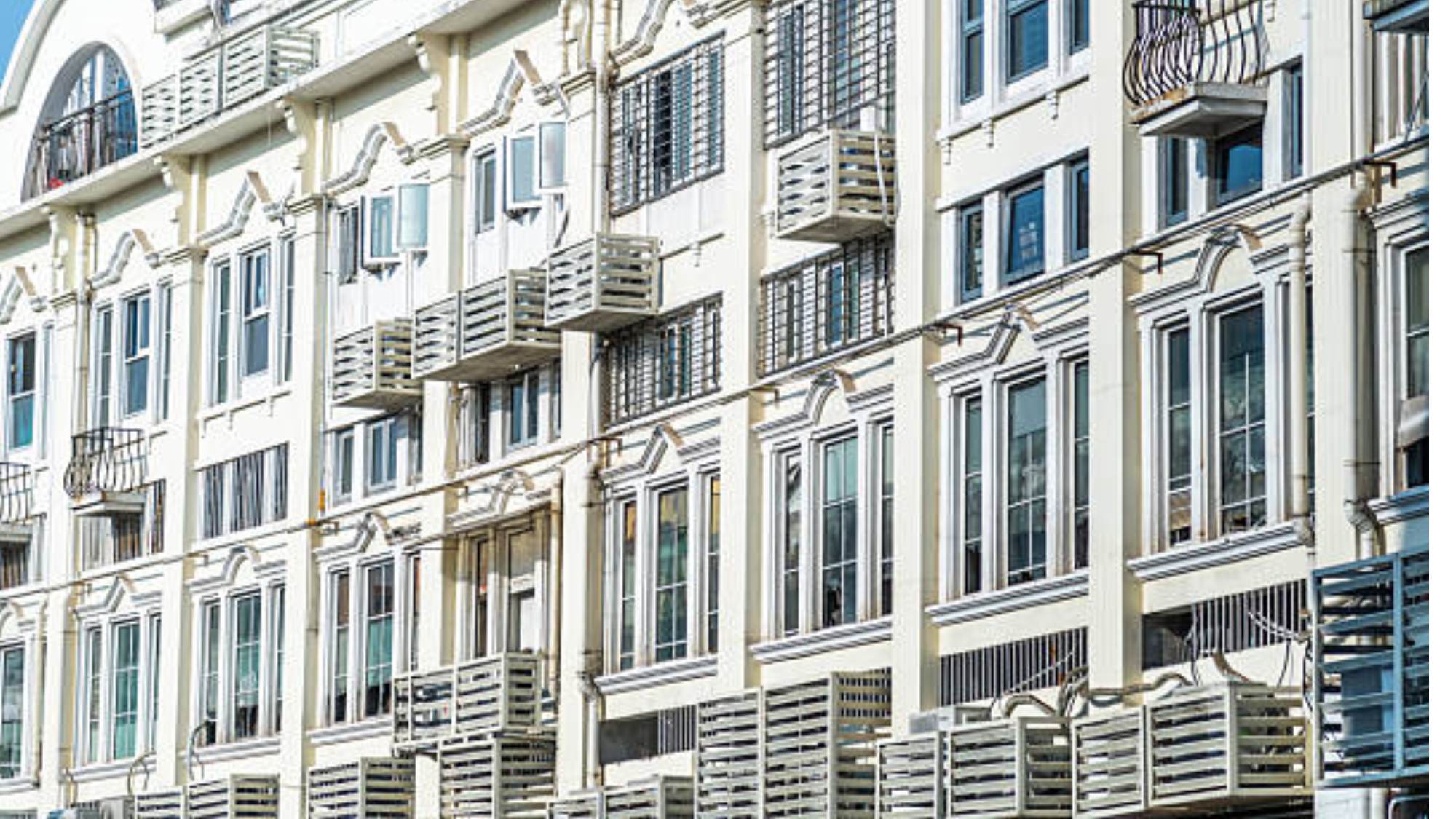
Penthouse Louver: Complete Design & Installation Guide for Rooftop Ventilation
Rooftop ventilation must withstand high wind loads and shifting thermal conditions. These demands require fixed assemblies that maintain airflow control while preventing mechanical exposure. A penthouse louver provides this performance at the envelope’s highest point—protecting internal systems and preserving design airflow.
Louver Performance Must Match Mechanical System Requirements
Airflow performance depends on precise free area calculations and the ability to resist wind-driven rain under rooftop conditions.
Free Area and Velocity Drive Sizing
A penthouse louver regulates airflow into and out of rooftop mechanical spaces while shielding internal systems from rain, debris, and pressure shifts. Because it is fixed rather than modulating, the design depends on accurate airflow modeling and system integration.
- Louvers installed at roof level face exposure to wind uplift, water intrusion, and thermal cycling.
- Their performance affects fan output, pressurization behavior, and overall system efficiency.
Calculating free area, face velocity, and pressure drop begins with understanding the airflow load.
- For example, a 3,000 CFM rooftop unit running at 500 feet per minute (fpm) requires 6 square feet of free area.
- Blade spacing, screen type, and frame dimensions all reduce that free area, meaning gross dimensions must be sized larger to meet performance targets.
Selecting an undersized louver can introduce velocity spikes or cause pressure imbalances that affect multiple system zones.
Rain Resistance and Blade Geometry
Weather exposure increases the risk of water penetration. Louvers tested to AMCA 500-L standards include published ratings for wind-driven rain performance at various velocities. These benchmarks matter in storm-prone areas.
Drainable blades redirect water toward internal weep paths, discharging it at the base rather than into the duct or enclosure. Selecting a non-drainable blade for exposed applications introduces long-term risk. Blade geometry, spacing, and orientation all influence how water moves across and through the louver face.
Mounting Method and Roof Integration Shape Field Performance
Proper installation and long-term performance depend on how the louver interfaces with the curb, fasteners, and sealing system. The following sections address mounting mechanics, installation checks, and maintenance.
Curb Compatibility and Seal Integrity
A curb-mounted installation requires structural, thermal, and moisture continuity.
- The curb may be fabricated from steel, insulated sheet metal, or wood—each with its own flange compatibility and fastening method.
- Installers must verify bolt alignment, gasket compression, and sealant application along the perimeter flange.
- Improper seating or skipped fasteners can lead to uplift failure or water ingress.
- Sealant must be continuous at all flange surfaces and fastener penetrations.
Installation Verification and Torque Requirements
Each of the following steps helps ensure the louver is properly seated, sealed, and secured against rooftop forces.
- Before sealing begins, installers verify curb dimensions against louver base specs.
- Edge clearances and fastener spacing are confirmed to prevent flange distortion or uneven blade alignment.
- Diagonal checks help detect racking or twist that could stress welded corners once torque is applied.
- A dry fit identifies any frame interference or flange gaps that require adjustment.
- After final positioning, fasteners are torqued per manufacturer spec, and continuous sealant coverage is inspected around all mounting surfaces. If fasteners are underdriven or seals are uneven, water can bypass the flange and lead to long-term leaks.
Field Maintenance and Service Intervals
Seasonal maintenance includes visual inspection of flange seals, gasket compression, and debris removal from weep paths. Fasteners should be re-torqued to 85–95 in-lbs if accessible, with frame alignment verified during each service cycle.
Corner Joint Selection Impacts Drainage and Appearance
Corner design plays both structural and visual roles. Boxed corners use square intersections, simplifying fabrication and assembly. This approach aligns well with basic rectangular layouts and allows fast turnaround in shop production.
Mitered corners join blades at a 45-degree angle, producing a continuous seam with no stepped edge. They drain water more effectively, resist buildup at the joint, and create a smoother perimeter line. However, they require more precise fabrication, tighter weld tolerances, and careful installation. Architects often specify mitered corners for visual alignment and continuous edge appearance in rooftop structures visible from grade.
Material Selection Affects Load Resistance and Longevity
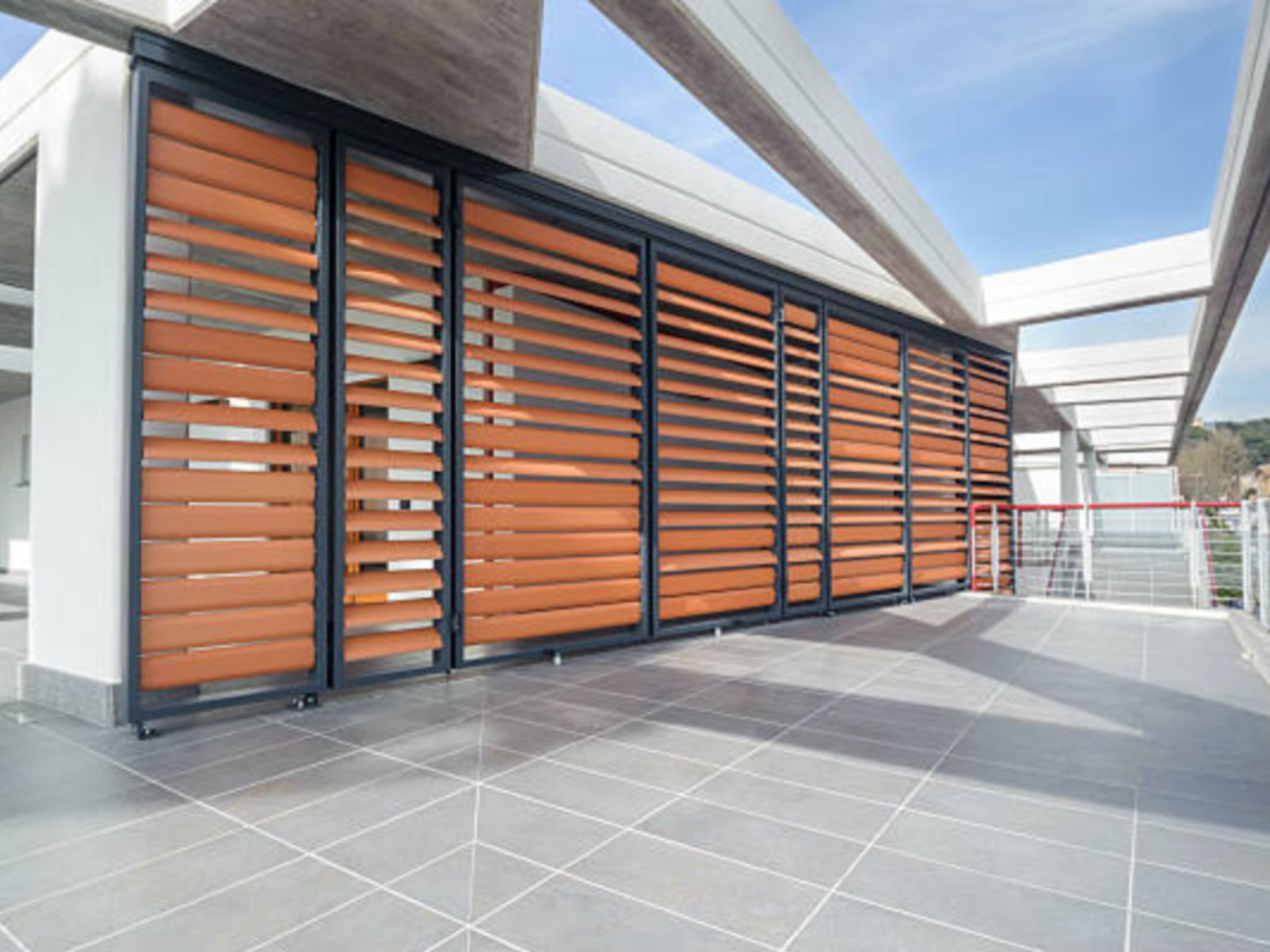
Material selection shapes how the louver performs under rooftop loads, resists corrosion, and maintains its finish in UV and moisture exposure.
Aluminum, Galvanized, and Stainless Steel Options
Most commercial louvers use extruded aluminum profiles, typically 6063-T6 alloy. It balances strength, corrosion resistance, and weight—making it suitable for rooftop installation by crane or lift. Aluminum withstands coastal and urban exposure with minimal degradation and can be factory-finished in powder coat or anodized systems.
Galvanized steel options add compressive strength but require edge sealing or finish touch-up after fabrication. For industrial or coastal projects, stainless steel offers long-term corrosion resistance. Surface treatments meeting AAMA 2604 or 2605 standards preserve color and gloss under intense UV and rain exposure.
Blade and Frame Construction Factors
Blade profiles, depth, and gauge all affect how the assembly withstands wind, load, and vibration. Applications exposed to heavy winds or thermal expansion must use reinforced frame members and stiffer blades to prevent deflection.
Specialized Louvers Tailored to Acoustic, Wind, or Smoke Needs
Some rooftop applications require louvers that also absorb sound, withstand windborne debris, or activate during smoke events.
Acoustic Attenuation Louvers
Rooftop systems near schools, healthcare centers, or residential zones often require integrated sound attenuation. Acoustic penthouse louvers use deeper blade geometry and internal baffles to absorb or redirect sound energy. Because this reduces airflow capacity, engineers recalculate fan curve output to ensure the system maintains target CFM.
Impact-Resistant Louvers for Wind Zones
High-wind or coastal regions may require impact-rated louvers designed to meet ASTM or Miami-Dade certification. These include blade reinforcements, deeper frames, and braced corners to resist uplift and windborne debris. Engineers use published resistance data to size support bracketing and connection points accordingly.
Final Louver Selection Should Reflect Both Envelope and System Goals
Coordinated louver selection depends on airflow demands, structural load paths, and visual alignment within the envelope design.
Matching Mechanical and Envelope Conditions
Designing around airflow and envelope continuity requires more than aesthetic alignment. Engineers match louver selection to mechanical system load, pressure profiles, and building location. Dimensions must allow for screens, drain paths, and thermal expansion. Structural teams coordinate curbs and anchoring systems. Architects confirm visual alignment and finish integration.
Verifying Performance Data and Field Suitability
A penthouse louver that matches the building envelope, mechanical system, and installation environment avoids rework and service calls. Product data must align with airflow requirements, frame strength, and finish durability. Engineers should verify published test data for AMCA 500-L rain resistance and airflow drop at specified velocities.
Trade Coordination and System Integration
In the final selection phase, coordination between trades ensures each product integrates into the total rooftop assembly.
Choose Air Performance Penthouse Louvers to Control Rooftop Airflow and Weather Intrusion
Our penthouse louvers are engineered for tested airflow performance, weather resistance, and integration with curb-mounted assemblies. We offer drainable, acoustic, and mitered-corner models that support envelope continuity and long-term durability. Contact us today for more information.